


What’s new with Medicare? 5 ways Medicare is changing for 2027
Every fall, about 70 million Americans — or about 20% of the population — can compare their Medicare options and make changes.
Whether that’s picking a new Medicare Advantage plan or a Part D prescription drug plan, the Annual Enrollment Period (Oct. 15 through Dec. 7) is a crucial seven-week window that will affect the health and finances of beneficiaries during 2027.
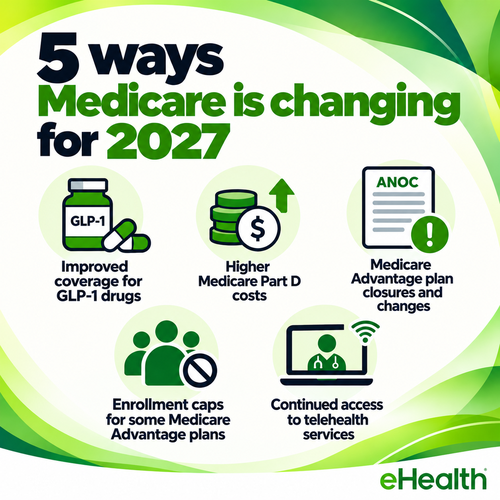
But every year Medicare plans can change in ways that beneficiaries and their families should be aware of. Here are five of the most important changes for next year:
Improved coverage for GLP-1 drugs. While Medicare plans have long covered GLP-1 drugs to treat chronic conditions such as diabetes, access to these medications for obesity has been limited. That is starting to change, both through Medicare Advantage plans and the new Medicare GLP-1 Bridge program. For instance, most Medicare Advantage plans (93%) will cover at least one GLP-1 drug to treat obesity for eligible beneficiaries in 2027, up from just 5% of plans in 2026, according to eHealth data.
Higher Medicare Part D costs. About 56 million Americans are enrolled in Medicare Part D coverage, either through Medicare Advantage or a stand-alone plan. Many of them will pay more out of pocket for this coverage, including in terms of monthly premiums, deductibles, and out-of-pocket maximums. With a temporary federal program that had supported lower Part D premiums ending this year, Medicare beneficiaries can expect to pay more out of pocket for their prescription medications in 2027.
Medicare Advantage plan closures and changes. As in recent years, many Medicare Advantage plans are being cancelled or changing for 2027. Over 3 million Americans are enrolled in Medicare Advantage plans that have been cancelled for 2027, while millions more are currently in plans that will have updates related to costs, provider networks, or benefits like dental, vision, and hearing. To determine if this impacts you, review your Annual Notice of Change (ANOC) letter, which you should have received in the mail and is available via your plan's website or app.
Enrollment caps for some Medicare Advantage plans. Amid these changes and closures, more health insurance companies are capping enrollment in certain plans. That means once a certain number of Medicare beneficiaries enroll in a Medicare Advantage plan, the insurer may stop accepting applications if the membership capacity has been reached. The takeaway: If you find a Medicare Advantage plan you like, act soon or you may miss the opportunity to enroll.
Continued access to telehealth services. Many Medicare beneficiaries first tapped into telehealth services during the COVID-19 pandemic, with access granted through a temporary program authorized by Congress. That access has been extended once again, ensuring virtual care remains accessible and reimbursable for Medicare beneficiaries through at least the end of 2027.
Most Medicare beneficiaries (71%) say shopping for a new plan is confusing, which is understandable given the annual changes. But by taking the time to compare your options and understand how Medicare plans may be changing for 2027, you can make a more informed decision based on your personal needs.
-
Whitney Stidom is vice president of consumer enablement at eHealth, an online health insurance marketplace that helps consumers navigate their health benefit decisions.