


GLP-1 drugs and Medicare: How beneficiaries can save on these blockbuster medications
For the over 60% of Americans 65 and older who are overweight or obese, GLP-1 drugs are a potential game changer. But for many Americans, the high cost of these medications is a barrier to use, including limited access through Medicare plans.
That is starting to change, especially with the July 1 launch of the GLP-1 Bridge program.
Originally developed to help treat type 2 diabetes, GLP-1 drugs have proven effective at promoting weight loss, at least for as long as the medications remain in use. And more older people want to use them: A new eHealth survey found that 28% of Medicare beneficiaries said they have used a GLP-1 medication at some point, while 39% said they would be interested in trying one of these drugs if they were covered by Medicare.
While Medicare health plan coverage for these drugs varies depending on the type of insurance plan and what these drugs are being prescribed for, recent changes are starting to make these drugs more accessible for more Americans.
Here is a look at how access to GLP-1 drugs is changing for people with Medicare:
Original Medicare and Medicare Advantage
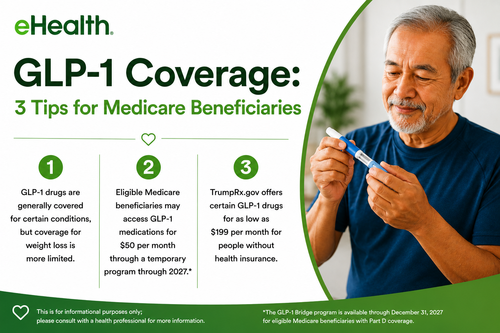
If you have Original Medicare or a Medicare Advantage plan, GLP-1 drugs are generally covered for the treatment of certain chronic conditions. For instance, 98% of Medicare Advantage plans cover at least one GLP-1 drug for the treatment of diabetes. Coverage for weight loss is far less common, with fewer than 1% of Medicare Advantage plans offering that.
GLP-1 Bridge program
As of July 1, eligible Medicare beneficiaries with Part D coverage may be able to access certain GLP-1 medications for $50 per month through a temporary program running through 2027. Eligible beneficiaries must be at least 18 years old and fall into one of the following groups:
1. Have a body mass index (BMI) of 35 or higher.
2. Have a BMI of 30 or higher along with certain health conditions, including heart failure, uncontrolled high blood pressure, or chronic kidney disease.
3. Have a BMI of 27 or higher along with conditions like pre-diabetes, a previous heart attack or stroke, or peripheral artery disease.
Given how new this program is, most Medicare beneficiaries (73%) are unaware of it. Importantly, eligibility depends on meeting specific prior-authorization criteria, your doctor’s approval and enrollment in a standalone prescription drug plan or Medicare Advantage (MA) coordinated care plan that offers prescription drug coverage in 2026.
Paying out of pocket without insurance
For people without Medicare or insurance coverage, including from any state, government or federally funded program, the Trump Administration is taking steps to make GLP-1 more affordable through TrumpRx.gov. The site offers certain types of GLP-1 drugs with monthly prices that average $350 and as low as $199, depending on dosage. That compares to previous monthly prices of over $1,000. If you don’t have insurance, this is among the most affordable ways to access a GLP-1 for weight loss or the treatment of a chronic condition such as diabetes.
If you or a loved one is considering a GLP-1 drug, it is important to review your health benefits carefully to understand when these drugs may be covered and at what price, especially with Medicare coverage policies, qualifying criteria and plan benefits continuing to evolve.
Whitney Stidom is vice president of consumer enablement at eHealth, an online health insurance marketplace that helps consumers navigate their health benefit decisions.
- For additional insights, click here for a US News & World Report story that cites eHealth data on this subject